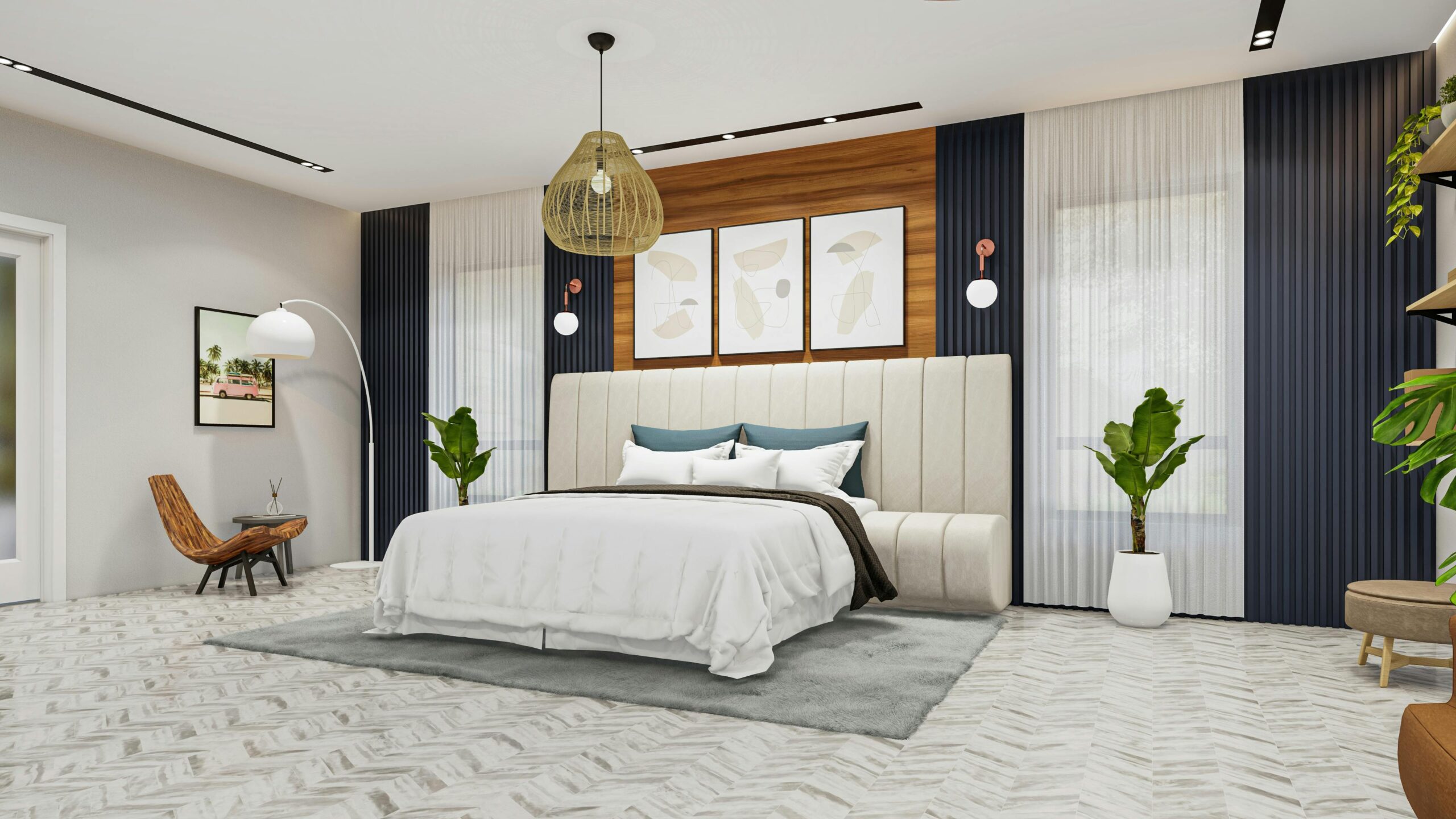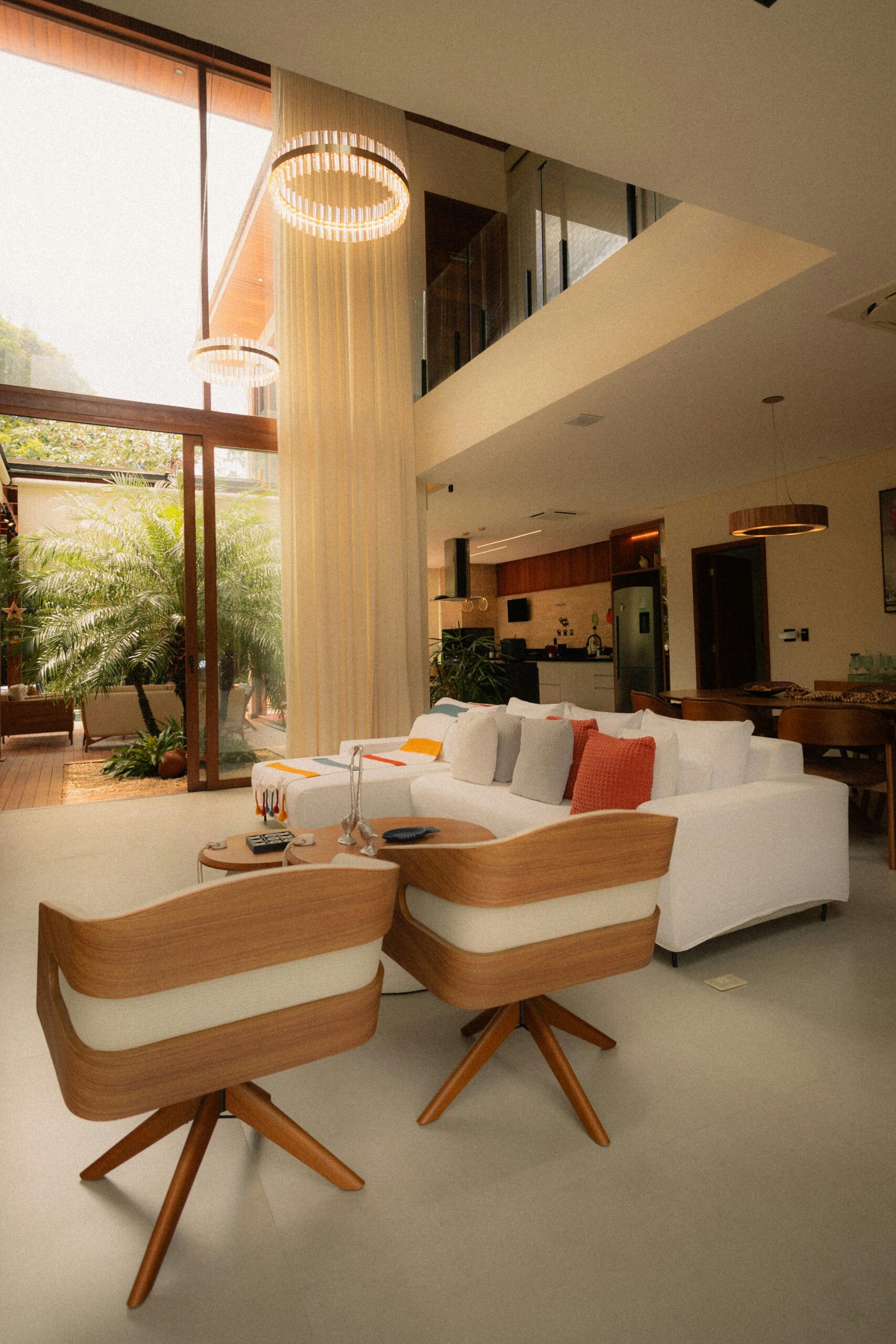
Importance of Natural Light in Residential Interiors
In March 2026, Natural Light is no longer viewed as a “luxury feature” but as a fundamental requirement for Human-Centric Architecture. As residential design increasingly prioritizes mental health and energy efficiency, sunlight has become the most powerful “material” in an architect’s toolkit.
The 2026 approach focuses on Circadian Syncing, Thermal Regulation, and Visual Expansion.
1. The Biological Necessity: Circadian Health
The primary role of natural light in 2026 is the regulation of the human “internal clock.” Exposure to full-spectrum sunlight, especially in the morning, is scientifically linked to improved sleep quality and mood.
- Melatonin & Cortisol Regulation: Morning sunlight (blue-heavy spectrum) triggers cortisol production to wake the brain. As the sun sets, the shift to amber tones signals the body to begin melatonin production.
- Vitamin D Synthesis: Even filtered through modern 2026 smart-glass, natural light remains the most efficient way for the body to process Vitamin D, which is essential for immune function and bone health.
- The “Window View” Effect: Recent neuro-aesthetic studies show that seeing the “movement” of light (shadows of trees, changing clouds) reduces heart rates and lowers cortisol levels by providing a constant, subtle connection to the natural world.
2. Space Perception and “Visual Square Footage”
Natural light is the ultimate tool for making small urban homes feel expansive.
- Eliminating “Dead Zones”: Dark corners make a room feel smaller and “caved in.” Strategic light placement—using skylights or “Solar Tubes”—can make a 500sq ft apartment feel significantly larger by illuminating the full perimeter of the floor.
- Color Accuracy: Artificial lights (even high-end 2026 LEDs) struggle to replicate the CRI (Color Rendering Index) of 100 provided by the sun. Natural light ensures that the textures of wood, stone, and calligraphic art appear in their true, vibrant forms.
- Shadow Play: In minimalist design, shadows are treated as “free decor.” The changing angle of the sun creates dynamic patterns on walls, providing visual interest without adding physical clutter.
3. Energy Efficiency and “Passive” Design
In the 2026 climate, natural light is a key component of a home’s Energy Intelligence.
| Feature | Traditional Window | 2026 Smart Glazing | Impact |
| Heat Gain | High (Greenhouse effect). | Dynamic Tinting. | Blocks IR heat while letting in visible light. |
| Insulation | Poor (Single/Double pane). | Vacuum-Insulated (VIG). | Maintains interior temp better than a brick wall. |
| Lighting Load | Lights on all day. | Solar Harvesting. | Reduces daytime electricity use by up to 60%. |
4. 2026 Techniques for Maximizing Light
Designers are using advanced architectural “tricks” to bring light into deep or narrow floor plans.
- Light Wells and Atriums: In multi-story homes, a central “glass core” allows sunlight to reach the ground floor and basement, turning dark utility areas into bright living zones.
- Clerestory Windows: Narrow windows placed high on the wall (near the ceiling). These provide soft, diffused light and maintain privacy in dense urban neighborhoods.
- Reflective Surfaces: Using polished stone floors or “Satin-Finish” paints that act as Light-Bounce Stations, pushing sunlight from the window area into the back of the room.
- Internal Glass Partitions: Replacing solid walls with “Broken-Plan” industrial glass or reeded glass panels allows light to flow from a sunny living room into a windowless hallway.
5. Summary: Light as a Wellness Asset
In 2026, a “High-Value” home is defined by its Light-to-Floor-Area Ratio.
- Prioritize the East/West Axis: Kitchens and breakfast nooks should face East (morning energy); living rooms should face West (evening relaxation).
- Use “Smart” Treatments: Automated blinds that track the sun’s position to prevent “Heat-Scald” while maximizing brightness.
- The “5-Foot Rule”: Ensure every primary seating area is within 5 feet of a natural light source to maximize the psychological benefits.
2026 Design Tip: If your home feels dark this month, check your Window Treatments. Swapping heavy, dark drapes for “Sheer Linens” can increase your ambient light levels by up to 30% without sacrificing privacy.

Related Posts
Luxury Home Interiors: Design Elements and Trends
Wall Décor and Art Placement in Modern Homes